
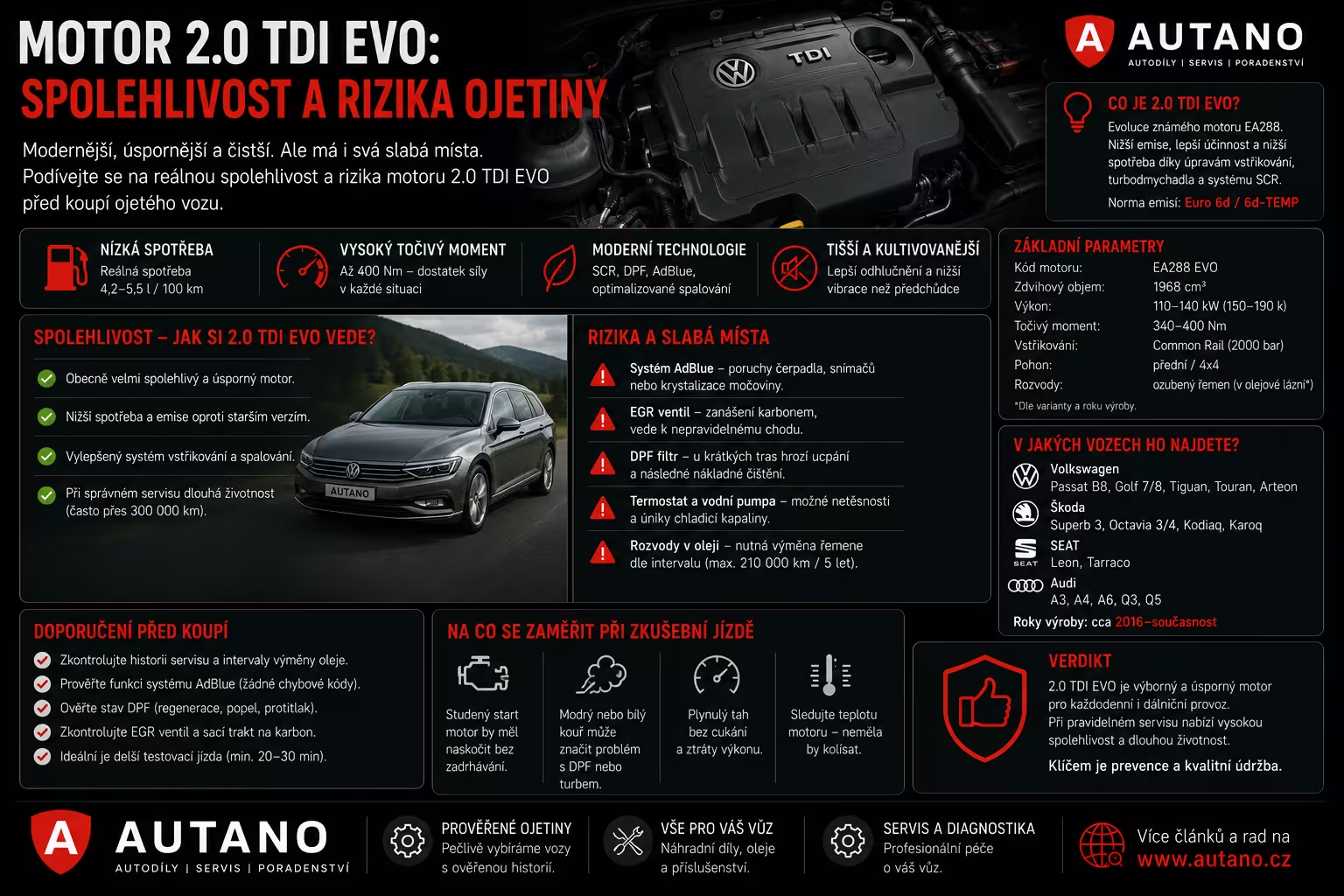
The 2.0 TDI EVO engine (internally designated EA288 EVO) made its debut in the group’s vehicles in 2019, and by 2026 it forms the backbone of the used car market for the B8 Passat, Superb III, and Octavia IV. It promised lower fuel consumption, smoother operation, and extremely low emissions. For used car buyers, however, the key question is whether these innovations will turn into expensive repair bills after 150,000 km.
What makes "EVO" different?
It’s not just about the software. The engineers have completely redesigned the engine. The main changes include an aluminum block in the more powerful versions (147 kW), which reduces weight, and a modified cooling system. Thanks to separate cooling circuits for the cylinder head and block, the engine reaches operating temperature after just a few kilometers, which benefits both turbo performance and fuel economy.
Another new feature is Twin Dosing —a system with two AdBlue injectors. One is located right next to the engine, while the other is further down the exhaust. This results in an 80% reduction in NOx emissions, but also in a more complex sensor system that occasionally “malfunctions” in used vehicles.
What should you look out for when buying a used car?
Although the EVO generation is mechanically very durable, it has certain characteristics that you shouldn’t overlook when buying one in 2026:
- Oil consumption in the 147 kW model: The more powerful version with an aluminum block in early model years (2020–2021) occasionally suffered from higher oil consumption. Before purchasing, check the exhaust tips—they should be clean and free of greasy soot.
- Throttle lag: Due to emissions limits, the engine responds to the gas pedal with a slight delay. Many used cars have this "issue" resolved through a software modification (chip), which can be a plus for performance but a minus for any warranties.
- Sensitivity to fuel quality: The fuel injectors in the EVO generation operate at extremely high pressures. Filling up with cheap fuel at unbranded gas stations in 2026 will result in costly fuel system cleaning.
- Twin Dosing Electronics: If the engine warning light comes on with an AdBlue error, the fix is no longer just a matter of topping off the fluid. It is often a faulty NOx sensor, which costs between 12,000 and 18,000 CZK to replace.
Comparison: 2.0 TDI (older EA288) vs. 2.0 TDI EVO (EA288 EVO)
| Parameter | 2.0 TDI (until 2019) | 2.0 TDI EVO (2019–) | The difference in practice |
|---|---|---|---|
| Engine Warm-up | Slower (approx. 10–15 km/h) | Very fast (approx. 5 km) | Better for the engine and the heater in winter. |
| Noise level | The typical diesel clatter | Significantly quieter and smoother operation | The EVO operates like a gasoline engine. |
| Consumption | approx. 5.2–5.8 L/100 km | approx. 4.5–5.1 L/100 km | The EVO saves about 0.5 liters on the highway. |
| The Complexity of Emissions | One SCR circuit | Twin Dosing (two circuits) | The EVO is cleaner, but more expensive to maintain. |
Who is the EVO engine ideal for?
The EVO is the king of the highway. If you’re looking for a car for long drives where you can take full advantage of its quick warm-up and low fuel consumption, it’s the best diesel on the market. On the other hand, for short trips around town, its complex emissions system is an unnecessary risk. In that case, you’re better off going with the 1.5 TSI gasoline engine.
Autano.cz's Verdict
The 2.0 TDI EVO engine represents the pinnacle of diesel technology. You have nothing to worry about with a used car that has a clear history and under 150,000 km on the odometer. It’s smoother and more fuel-efficient than its predecessor. Just make sure to check the documented oil change history (shorten the interval to 15,000 km), and for the more powerful 147 kW version, check whether the engine is losing oil on the dipstick.



Post a comment