
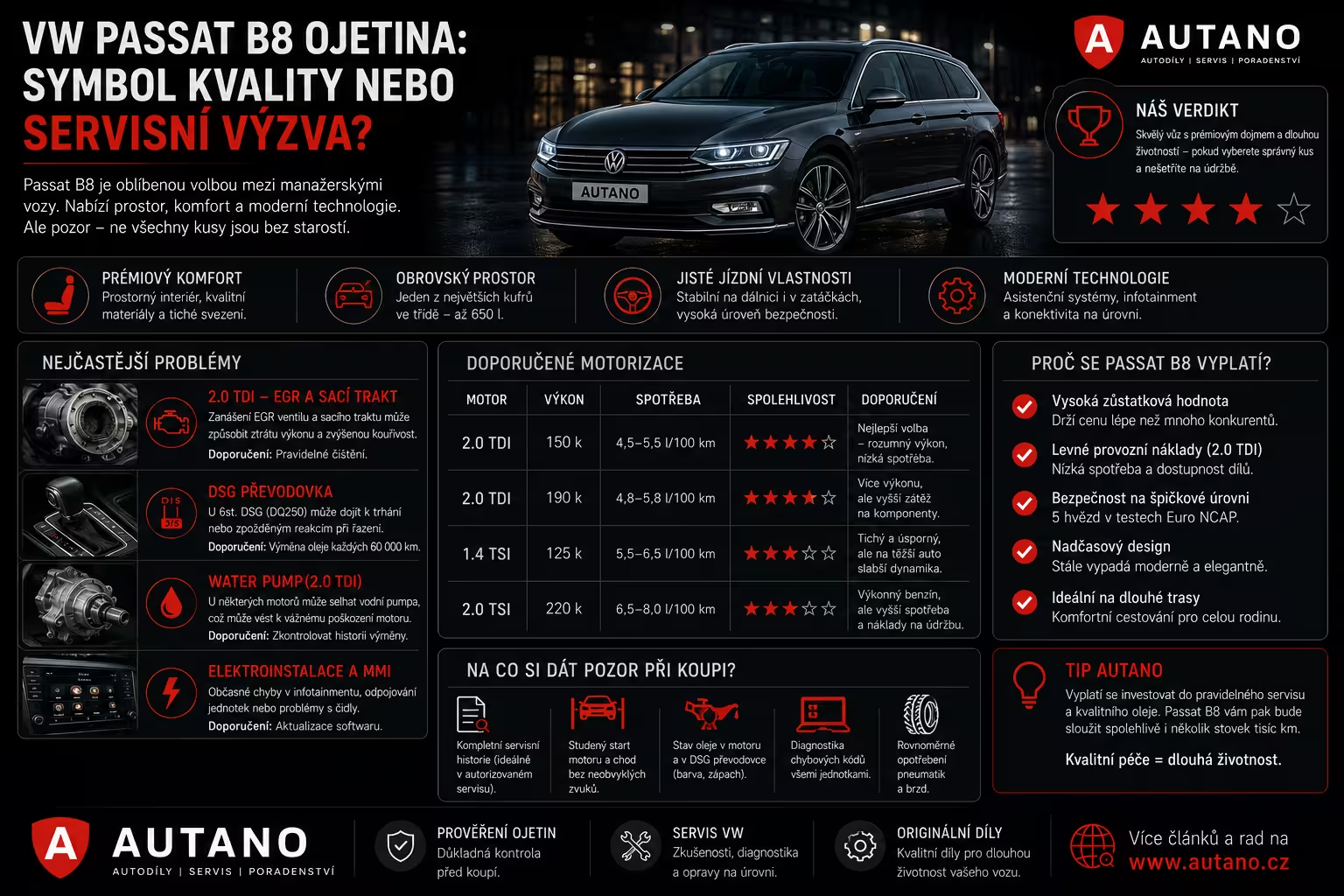
The Volkswagen Passat B8 is likely to be the best-selling used mid-size car in the Czech Republic in 2026. It’s a car that does it all—it’s spacious, fuel-efficient, and looks great both in front of your home and on corporate grounds. However, while it was a symbol of precision when new, as a used car with over 200,000 km on the odometer, it requires an experienced buyer who knows that driving quality is directly proportional to the quality of previous maintenance.
TDI Engines: A Legend That Needs Care
The most popular choice is the 2.0 TDI engine (110 kW or 140 kW). It is a mechanically robust engine, but by 2026, most used models on the market will require attention regarding emissions control systems and cooling.
- Water pump: On B8 Passats, the water pump with an electronic shutter often seizes up before the timing belt replacement interval (210,000 km). If you notice temperature fluctuations or coolant loss, do not delay in replacing the entire timing belt kit.
- AdBlue and DPF: Euro 6 models are sensitive to the quality of the urea solution and the condition of the NOx sensors. Repairing the AdBlue system can be costly, so when purchasing a vehicle, insist on a diagnostic check that shows no error codes.
- Carbon Buildup: If the Passat has been driven only on short trips around town, the intake manifold and EGR valve will become clogged. This manifests as hesitation or jerking at low RPMs.
DSG: Mechanics vs. Neglected Oil
This is where it all comes down to. If you're buying a Passat with an automatic transmission, you need to know what type of transmission your car has, because each one requires a different approach:
- Wet DSG (6- or 7-speed): Standard on the more powerful 2.0 TDI models. If the owner has faithfully changed the oil every 60,000 km, this transmission can withstand high mileage. However, without a documented history of oil changes, be prepared for the risk of mechatronic repairs.
- Dry DSG (7-speed): Common in less powerful gasoline engines (1.4 TSI, 1.5 TSI). This transmission is more sensitive to stop-and-go traffic, which causes excessive wear on the clutches. If the car vibrates when pulling away, the clutches are at the end of their service life.
DCC Suspension: Comfort Comes at a Price
Many B8 Passats are equipped with DCC adaptive dampers. They offer exceptional comfort on the highway, but in a used car with over 200,000 km on the odometer, they may be nearing the end of their service life. Replacing all four adaptive dampers is an investment of tens of thousands of crowns, which is a good reason to negotiate a discount.
Comparison: What to Look for Based on Mileage
| Distance (km) | Key inspection points | Recommended Service |
|---|---|---|
| 100,000–150,000 | Initial coolant leaks, brake condition | DSG oil change, chassis inspection |
| 150,000 – 220,000 | Timing belts, wheel bearings, shock absorber performance | Complete replacement of the timing belt, DPF cleaning |
| 250,000 or more | Injectors, dual-mass flywheel | Engine diagnostics, steering play inspection |
Autano.cz's Verdict
The VW Passat B8 remains an excellent used car for highway commuters who appreciate its quietness and low fuel consumption. However, it’s not the right car for those who want to service it only once every two years. To ensure it serves you well for a long time, you’ll need to shorten the oil change intervals to 15,000 km and address minor issues promptly. For city driving, look for the 1.4/1.5 TSI gasoline engine with a manual transmission; for highway driving, the 2.0 TDI (110 kW) with a serviced DSG remains the most sensible choice.


Post a comment