
Listen to the article
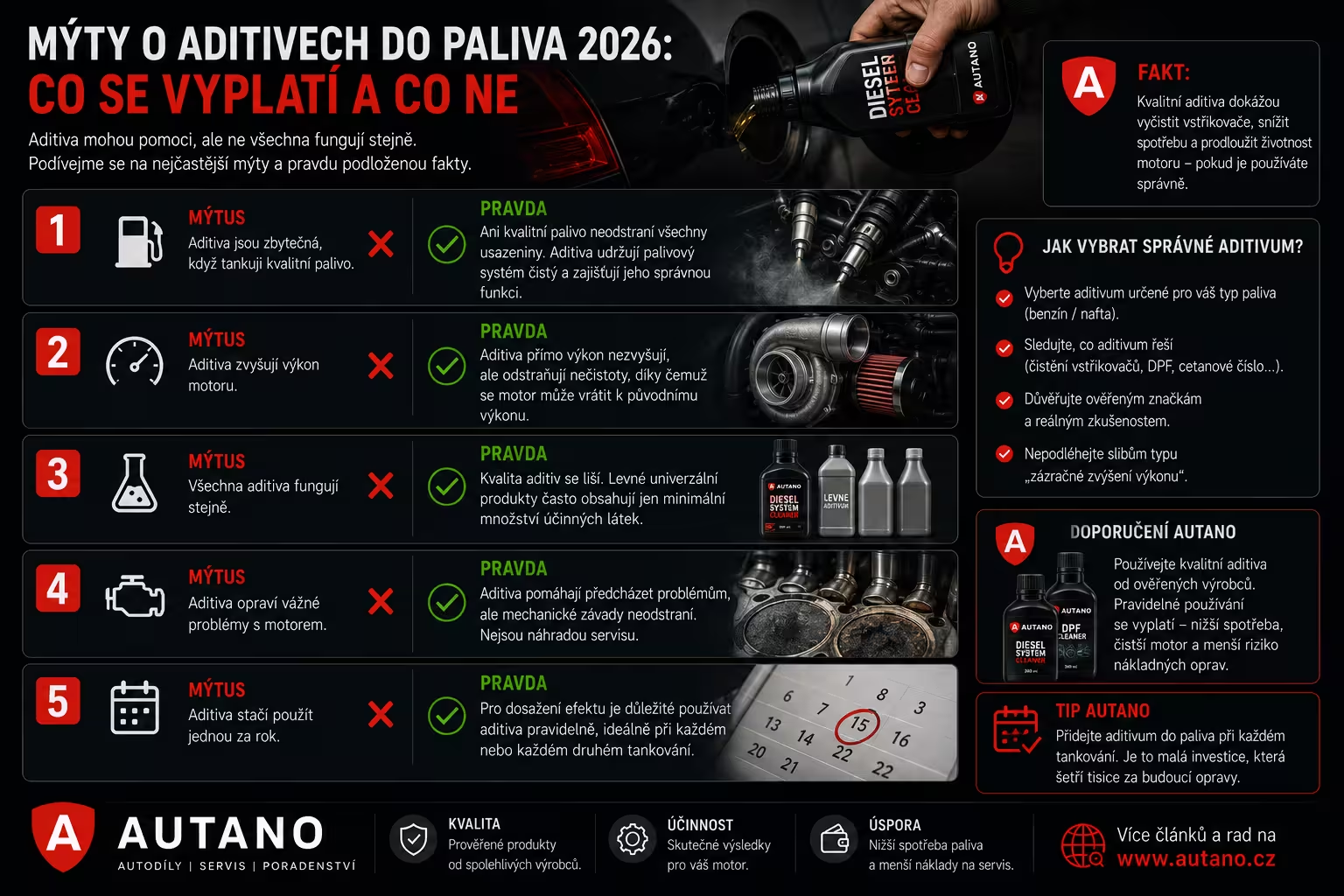
In 2026, there are still many half-truths circulating about fuel additives. Some drivers consider them a “miracle in a bottle,” while others see them as a waste of money. The truth lies somewhere in between. Modern used cars with direct injection and sensitive emissions systems are more sensitive to fuel quality than older diesels. The right additives can save you tens of thousands on injector repairs, but you need to know what to put in the tank and when.
Myth #1: “Premium fuels at the pump already contain all the necessary additives”
That is only partly true. Premium fuels (Verva, MaxxMotion, etc.) do indeed have a higher cetane or octane rating and contain cleaning agents.
- The reality: The problem is that at less-busy stations, these fuels can sit in the tanks for a long time. Furthermore, in used cars with over 150,000 km on the odometer, the concentration of cleaning agents in standard premium fuel is often too low to remove years of carbon buildup. Adding your own additives gives you control over the concentration.
Myth #2: “Additives can damage the engine or clog the filters”
With high-quality, certified products (such as the Czech brand VIF or the German brand Liqui Moly), this risk will not exist in 2026.
- Fact: Additives actually help keep the DPF filter clean by improving combustion and reducing soot production. The only risk is using harsh cleaners in extremely neglected engines, where a large amount of debris can be released all at once. Therefore, for used cars with an unclear maintenance history, start adding additives gradually.
| Additive type | Main benefit | When should you use it? | Recommendations from Autano.cz |
|---|---|---|---|
| Winter additives | They improve the flow of diesel fuel in cold weather. | November through March. | A must-have for older diesel engines. |
| Injector Cleaners | They remove deposits from the nozzles. | One-time (5,000 km). | Perfect right after buying a used car. |
| All-season additives | They lubricate the pump and prevent corrosion. | Every time you fill up. | The best way to ensure a long life. |
| DPF Additives | They reduce the soot burning temperature. | When driving in the city. | It protects the filter during heavy traffic. |
Myth #3: “Additives significantly reduce fuel consumption”
If someone promises you a 2-liter reduction in fuel consumption, they're lying.
- Reality: The actual reduction in fuel consumption ranges from 3% to 5%. The main benefit is not fuel savings, but the protection of expensive components. In 2026, the cost of refurbishing a single injector for a 2.0 TDI engine is around 6,000 CZK—an additive that delays this investment by 100,000 km will pay for itself many times over.
Autano.cz's Verdict
Adding additives to standard fuel will be cheaper than filling up with premium blends by 2026 and offers greater efficiency. For owners of used diesel vehicles, a high-quality additive is essentially a must-have that protects the fuel pump and injectors from low-quality fuel. For direct-injection gasoline engines, additives are crucial in preventing valve carbon buildup.



Post a comment