
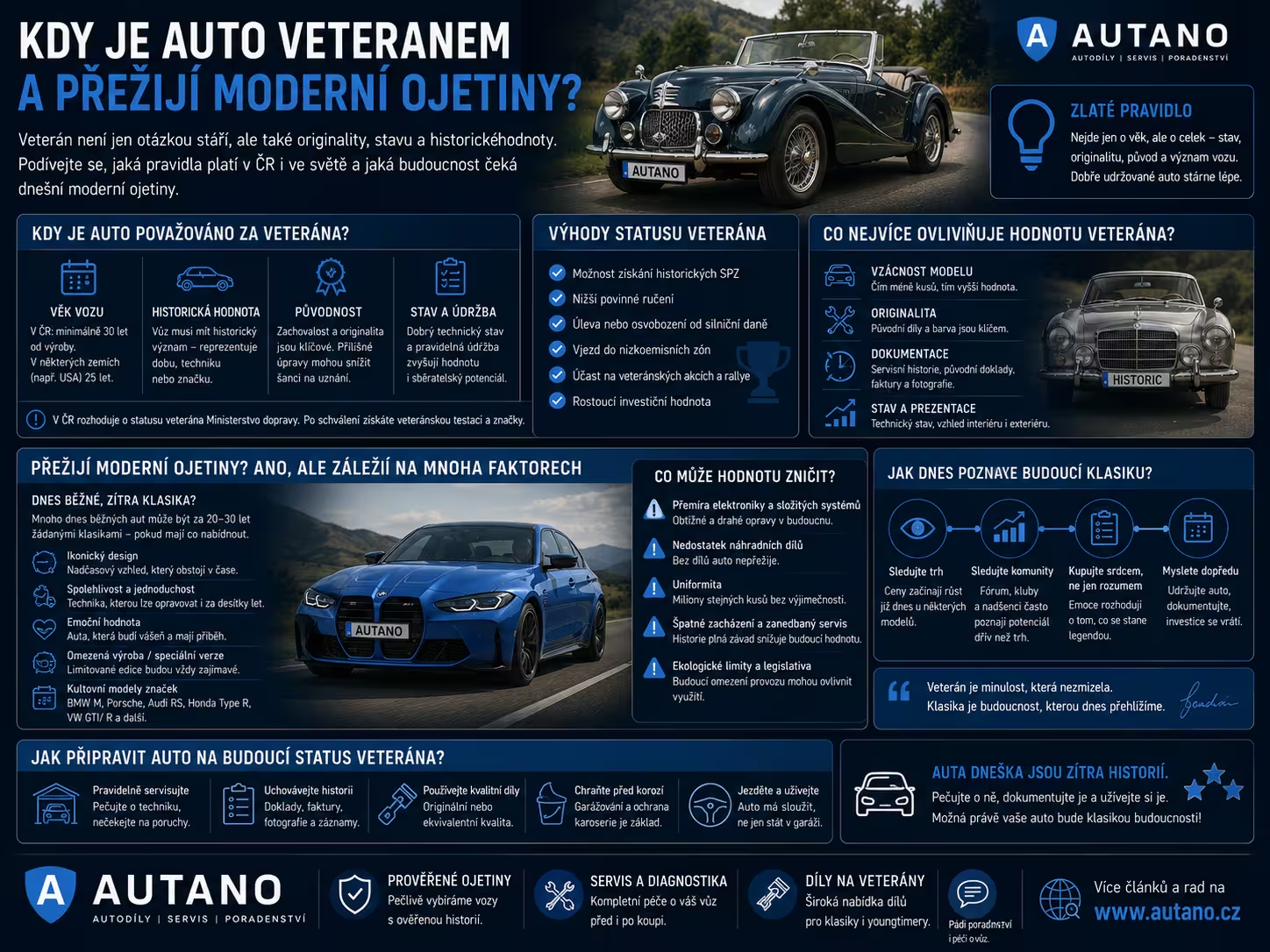
In 2026, the line between an “old car” and a “classic car” is much thinner than it seems at first glance. While the tax office considers a car used after just a few months, for collectors, a car’s true life only begins after decades. With the advent of digitalization, a pressing question arises: Will today’s cars, packed with sensors and tablets, even be able to reach vintage age?
When does a car stop being "new" and start being considered used?
From a legal and tax perspective, the definition is strict. As we discussed earlier in relation to VAT, a car is no longer considered a new vehicle if it is more than 6 months old and has been driven more than 6,000 km.
From a market perspective, however, a car loses its status as a new vehicle the moment it leaves the showroom. The first owner takes the biggest hit in terms of depreciation, and the car becomes a young used vehicle. This period lasts roughly until the car is 5 to 8 years old, when most manufacturer warranties and lease agreements expire.
The Road to Classic Car Status: The Magic 30
In order for a car to qualify as a classic vehicle (and receive the associated “V” license plates), it must meet the clearly defined criteria set by the international federation FIVA:
- Age: At least 30 years must have elapsed since the initial registration.
- Condition: The vehicle must be in a historically accurate condition, without any unauthorized modern modifications (e.g., a different engine type or non-original tuning).
- Purpose: The vehicle may not be used for daily business activities or regular transportation.
Cars between 20 and 30 years old are referred to as “youngtimers.” These are vehicles that have disappeared from everyday traffic but haven’t yet reached classic car status. This is where the rubber meets the road in 2026—used cars that survive this “period of disinterest” begin to gain value.
| Car model | Age of the vehicle | Status | Characteristics |
|---|---|---|---|
| New car | 0–6 months | New car | Full warranty, zero wear and tear. |
| A young used car | 1–7 years | Used car | Modern assistants, regular service. |
| Youngtimer | 20–30 years old | A future classic | Durability, nostalgia, rising prices. |
| Veteran | Over 30 years old | Vintage vehicle | Authenticity verification, investment value. |
Do modern cars have a chance of becoming classics?
That is the biggest challenge for 2026. With classic cars (Škoda 100, Jaguar E-Type), all you need is a skilled mechanic and a piece of sheet metal. With modern cars (Škoda Octavia IV, Tesla Model 3), the problem is digital longevity.
- Software: If the manufacturer shuts down its cloud servers or stops supporting the infotainment system’s operating system, the car will become a “dead” piece of electronics.
- Sensors and chips: The lifespan of semiconductors in the extreme temperatures of the engine compartment is limited. By 2055, a hard-to-find brake control chip may be a bigger problem than a rusted-through body.
- Materials: Recycled plastics and eco-friendly paints in the interior deteriorate faster than genuine leather and chrome from the 1960s.
Autano.cz's Verdict
Among today’s cars, the models most likely to become classics are those that are exceptional in some way (limited editions, the last pure internal combustion engines) or those that maintain a strong fan base capable of developing their own “emulators” for the original software. If you want to invest in a future classic, look for cars with minimal driver-assistance features and maximum mechanical joy.





Post a comment