
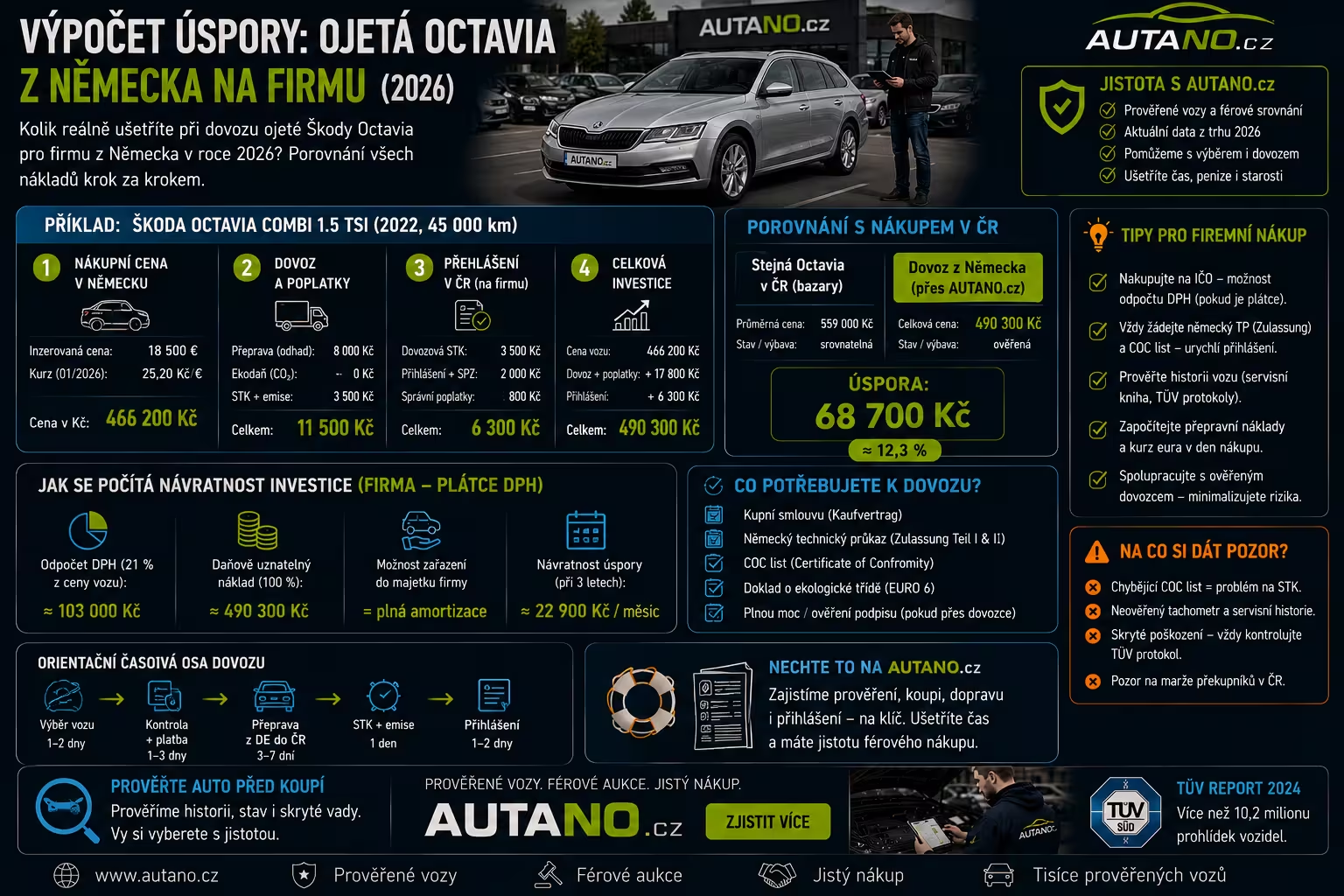
Purchasing a used car from Germany through a business (VAT-registered) is one of the most effective ways to acquire a high-quality vehicle while optimizing cash flow in 2026. The key is to purchase at the net price (excluding German VAT), which allows you to avoid paying tax in Germany and simply “self-assess” it administratively in the Czech Republic. Using the popular Škoda Octavia IV as an example, we’ll show you how much you’ll actually save compared to buying from a Czech used car dealership without the option of a tax deduction.
Example: Škoda Octavia IV (2.0 TDI, model year 2022)
Let’s assume that in Germany you find a certified pre-owned vehicle at an authorized dealer that allows for a VAT deduction (listed as “MwSt. ausweisbar” in the German ad).
- Price at a German used car dealership (gross): €21,420 (including 19% VAT)
- Price at a German used car dealership (Netto): 18,000 EUR
- Exchange rate (estimated for 2026): 24.50 CZK/EUR
Purchase Process for Businesses (VAT Payers)
As a Czech VAT payer, you are purchasing a car from a German VAT payer for business purposes. You provide the dealer with your VAT ID, and after verification in the VIES system, the dealer invoices you directly for €18,000. This means you send €3,420 (approximately CZK 83,790) less to Germany than you would if you were a private individual.
| Calculation item | Purchase by a private individual (in the Czech Republic) | Purchase by the company (from DE netto) |
|---|---|---|
| Purchase price of the car | 520,000 CZK | 441,000 CZK (18,000 €) |
| 21% VAT (refund/exemption) | 0 CZK (non-deductible) | + 92,610 CZK (tax savings) |
| Import and registration costs | 800 CZK (transcription) | 12,000 CZK (import + vehicle inspection) |
| Actual cost to the company | 520,800 CZK | 453,000 CZK |
Total savings for the company: 67,800 CZK
Why is it more cost-effective to shop in Germany?
In addition to direct savings on VAT, when purchasing Octavia, Passat, or Superb models in Germany, you often get a better service history and chassis condition. At Czech used-car dealerships, the price for vehicles sold under the § 90 regime is final, and the business owner cannot claim any tax deduction on it. In our example, the company saves nearly 70,000 CZK by purchasing an imported vehicle, which more than covers the costs of travel, inspection by a mechanic, and administrative fees.
What to watch out for when shopping at "Netto"
- VAT verification: The dealer must be certain that you are active taxpayers. Some used-car dealers require a deposit equal to the amount of VAT, which they will refund once you send them confirmation of the vehicle’s registration in the Czech Republic (known as a “Gelangensbestätigung”).
- Age and mileage: If the car has less than 6,000 km on it or is less than 6 months old, you would have to pay the 21% Czech VAT in the Czech Republic, regardless of the tax regime in Germany.
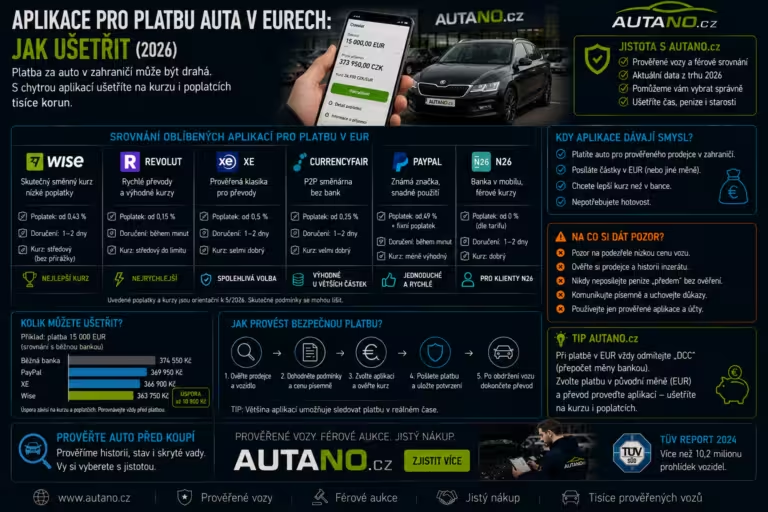
- Bank fees: When transferring large amounts in euros, keep an eye on exchange rates and bank fees, which can unnecessarily reduce your savings.
Autano.cz's Verdict
For a business (VAT payer), purchasing a used car from Germany under the net VAT scheme in 2026 is the most cost-effective way to acquire a newer vehicle. The savings on VAT, combined with the higher quality of the German market, far outweigh the costs associated with importing the vehicle. If you’re buying a car priced over 400,000 CZK, a trip to Germany will almost always pay for itself financially the moment you sign the contract.


Post a comment