
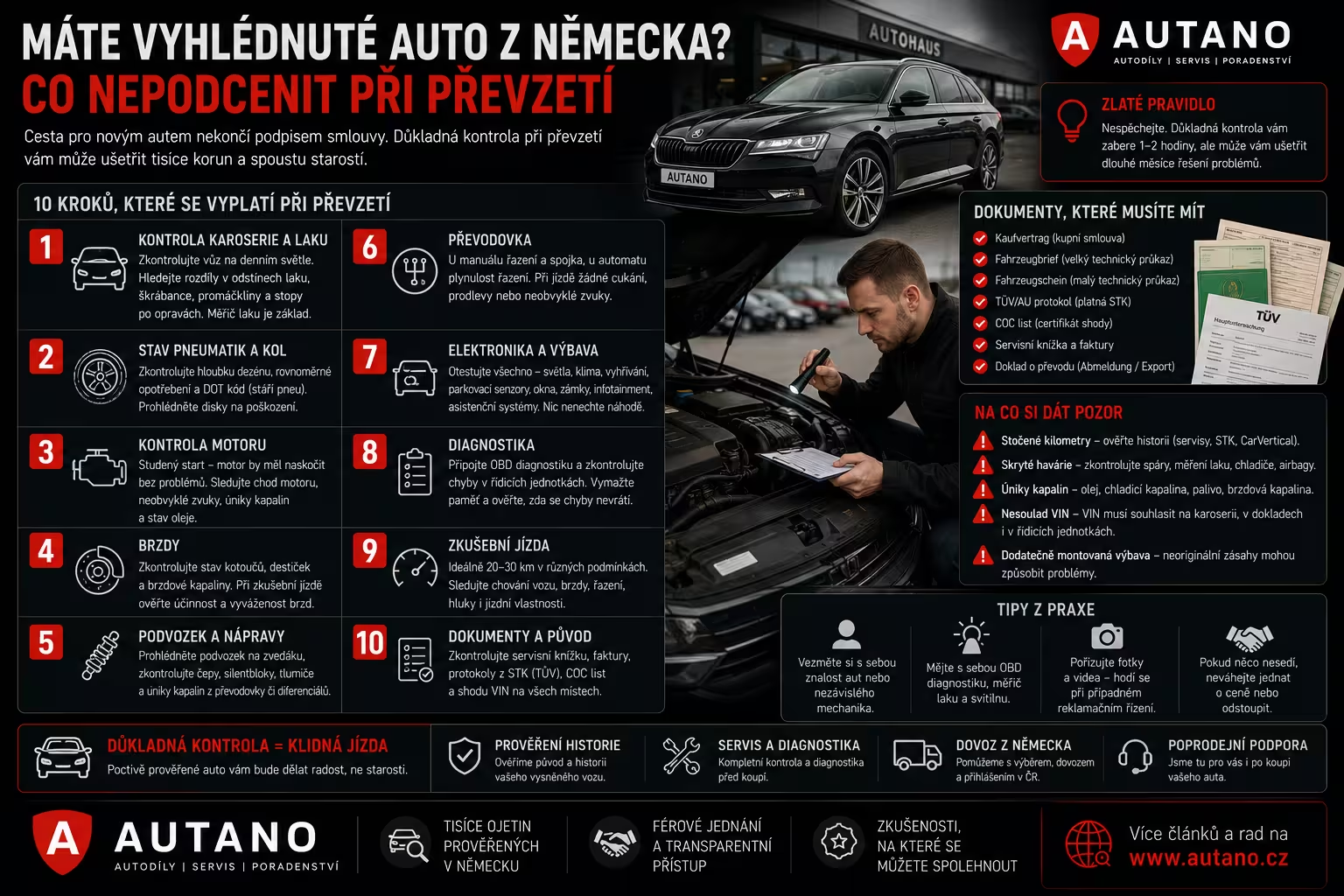
If you’ve already picked out a specific car on mobile.de and the digital history checks out, the most important part is still ahead of you—the in-person inspection. In the 100,000–300,000 km range, defects are harder to spot in German highway-driven cars than in city cars. While German dealers (Händler) are generally reputable, in 2026 even Germany is seeing an increase in reimported cars (e.g., from Romania or Poland) that merely pretend to be “German quality.”
Bodywork: Watch out for highway scuff marks and hidden repairs
Cars with over 150,000 km on the odometer tend to show specific signs of wear and tear from driving on German highways.
- Front end: The hood and windshield will have small "dots" from stone chips. If a car with 200,000 km on the odometer has a completely flawless paint job, it was likely repainted after an accident or underwent very thorough masking.
- Seams and screws: Always check the screws on the fenders and door hinges. If the paint is chipped around them, the part has been moved. On Passats or Audis, look for differences in paint shade between the bumper and the fender—plastic ages differently than sheet metal, but a significant difference indicates that the part has been repaired.
Engine and Chassis: What Diagnostics Can't Detect
Even if you have a history report, focus on the things the sensor can’t see when you’re on site:
- Cold start: Make sure the engine is cold when you arrive. A rattling timing chain on a BMW or a dip in RPM on a TDI EVO after starting will signal an impending repair bill.
- Fluid leaks: Look under the car and remove (if possible) the plastic engine cover. In cars with over 200,000 km on the odometer, the oil seals or gaskets around the turbocharger often leak.
- Axle play: German roads are in good condition, but the Czech D1 highway will immediately put the suspension to the test. During a test drive, check for vibrations in the steering wheel when braking (warped brake discs) or knocking over bumps.
Quick document review before signing
| Document | What to see | Why is this important? |
|---|---|---|
| Certificate of Registration, Part II | Number of owners (Anzahl der Vorhalter) | More than three owners in five years is a red flag. |
| HU/AU (TÜV) report | Reported defects (even minor ones) | It shows how well the owner actually took care of the car. |
| Service Invoices | VIN Match and Oil Brand | It will confirm whether corners were cut on materials (e.g., with the DSG). |
| Contract (Sales Contract) | "Accident-Free" Clause | It must explicitly state that the car has not been in an accident. |
The "Export/Gewerbe" tab
Be careful if the seller insists on selling “nur für Export” or “an Gewerbe” (for business use only). This allows them to avoid their legal liability for hidden defects, which is otherwise very strict in Germany. This is common for used cars with 250,000 km on the odometer, but for more expensive vehicles with under 150,000 km, it should be a red flag.
Autano.cz's Verdict
If you’ve found a car and checked its history, don’t let your emotions get the better of you during the inspection. Even the nicest-looking Audi on mobile.de might have a DSG transmission on its last legs. If the seller is in a hurry, refuses to let you take it for a test drive on the highway, or won’t show you the original vehicle registration certificate (Brief), move on to the next one. In Germany, there are enough cars in the 100,000–300,000 km range that you don’t have to compromise.






Post a comment